


Quantum computing is no longer just theoretical, it’s making a real world impact. The latest breakthroughs in quantum computing 2024 demonstrate unprecedented progress in hardware, software, and practical applications. Researchers have achieved higher qubit counts, improved gate fidelity, and robust quantum error correction, pushing quantum systems closer to commercial viability than ever.
The rise of hybrid quantum-classical computing, expanded cloud-based quantum computing platforms, and latest breakthroughs in quantum computing 2024 early applications in finance, drug discovery, and material simulations show the growing importance of this technology. This article highlights key 2024 advances, from quantum supremacy demonstrations to logical qubit scaling, offering a detailed overview of how quantum computing is evolving into practical, enterprise ready solutions.
Read More: Elliot Grainge Net Worth Explain: The Rise of a Modern Record Executive and Entrepreneur
What Is Quantum Computing (Quick Refresher)
Quantum computing approaches computation differently from classical systems. Unlike binary bits, qubits can exist in superposition, entangle with one another, and latest breakthroughs in quantum computing 2024 exploit interference to process information in ways classical computers cannot.
- Quantum superposition allows qubits to hold multiple states simultaneously, boosting computational power.
- Quantum entanglement links qubits, enabling instant correlations for faster calculations.
- Quantum interference enhances correct results while reducing errors in quantum algorithms.
| Feature | Classical Computers | Quantum Computers |
| Basic unit | Bit (0 or 1) | Qubit (0, 1, or superposition) |
| Parallelism | Sequential | Massive parallelism via superposition |
| Error sensitivity | Low | High, needs quantum error correction |
| Applications | General tasks | Molecular simulation, optimization, AI, cryptography |
Quantum computing doesn’t aim to replace classical machines. Instead, it complements them for portfolio optimization, material simulations, and drug discovery quantum computing, where classical methods struggle.
Key Quantum Computing Breakthroughs in 2024
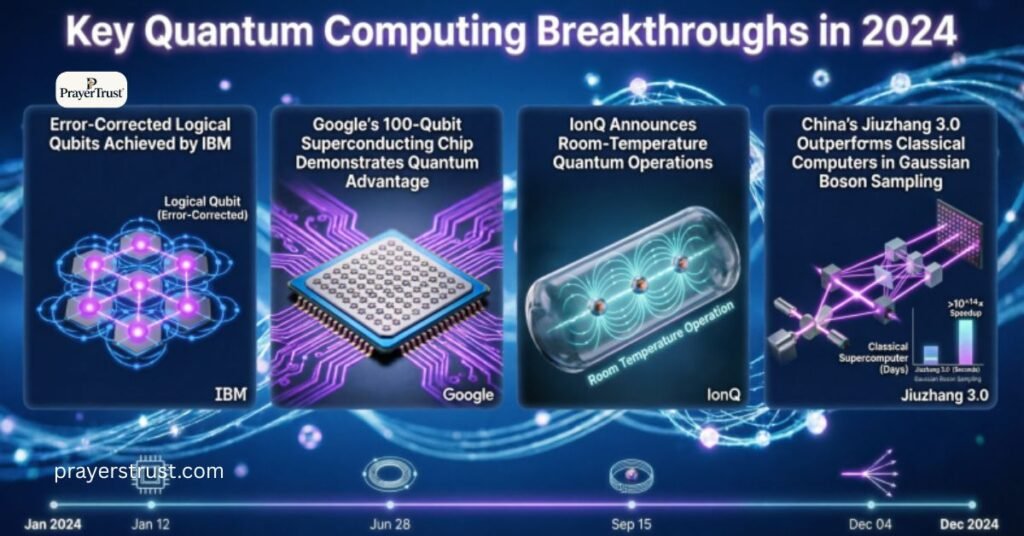
2024 marked significant progress, from quantum processors and qubit scaling to software ecosystems and practical applications.
Breakthrough #1: Major Advances in Quantum Error Correction
Qubits remain fragile, prone to decoherence. In 2024, quantum error correction techniques improved coherence and gate fidelity, enabling longer, fault-tolerant computations.
- Google’s Willow project showcased scalable error-correcting codes that extend qubit stability.
- Multi-layered codes allow hundreds of physical qubits to form a single logical qubit, vital for fault-tolerant quantum computing.
These developments are key for scaling quantum processors and achieving quantum supremacy in practical tasks.
Breakthrough #2: Quantum Processors Hit Record Qubit Counts
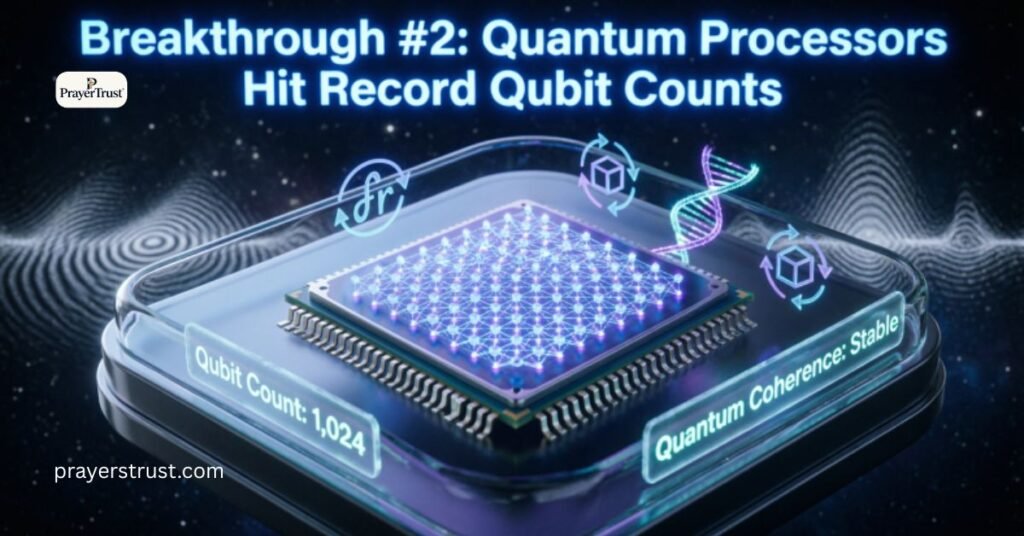
Quantum processor development accelerated in 2024, with notable achievements:
- IBM’s Condor processor exceeded 1,000 physical qubits with improved gate fidelity.
- Neutral atom platforms from Harvard, MIT, and QuEra demonstrated scalable logical qubits from hundreds of atoms.
Higher qubit numbers, combined with better coherence, expand quantum computing progress, enabling molecular simulations, complex quantum algorithms, and real-world quantum AI applications.
Read More: Riko Shibata: Biography, Family, Style, and Public Life Style
Breakthrough #3: Quantum Supremacy Becomes More Practical
Recent demonstrations proved quantum supremacy, showing quantum processors outperform classical systems in specialized tasks:
- Optimizing complex computations and simulations.
- Integrating into hybrid quantum-classical computing systems for industrial workflows.
These experiments highlight quantum computing’s transition from theory to applied science.
Breakthrough #4: Quantum Computing Meets AI
The merging of quantum computing and AI accelerates quantum machine learning and latest breakthroughs in quantum computing 2024 quantum optimization algorithms:
- Speeds up training for select neural networks.
- Supports portfolio optimization and supply chain optimization.
- Enables real-world quantum applications in finance, logistics, and molecular modeling.
Breakthrough #5: Cloud-Based Quantum Access Expands

Cloud-based quantum computing platforms like IBM, Amazon Bracket, and Microsoft Azure Quantum now provide:
- Developer-friendly quantum SDKs
- Access to both superconducting and neutral atom quantum processors
- Tools for experimentation and algorithm development
This democratization accelerates quantum computing adoption across industries and latest breakthroughs in quantum computing 2024 research.
Breakthrough #6: Hybrid Quantum-Classical Computing Gains Traction
Hybrid systems combine classical power with quantum acceleration:
- Classical computers manage general-purpose tasks
- Quantum processors handle simulations, optimization, and quantum AI tasks
This approach bridges the gap to real-world applications without requiring fully fault-tolerant quantum machines.
Breakthrough #7: Real World Industry Applications
2024 saw tangible quantum computing applications:
- Drug discovery quantum computing: Simulating molecules for faster development
- Material simulations: Designing novel alloys and compounds
- Finance and logistics: Portfolio and supply chain optimization
These milestones reflect the emerging commercial quantum computers ecosystem.
Harvard, MIT, and QuEra: Logical Qubit Leap

Neutral atom quantum processors demonstrate:
- Extended qubit coherence time
- Flexible gate connectivity
- Large-scale scalable quantum machines
These platforms complement superconducting architectures, offering alternative paths to stable quantum computation.
Comparing Superconducting vs. Neutral Atom Qubits
| Feature | Superconducting Qubits | Neutral Atom Qubits |
| Gate fidelity | High | Moderate |
| Coherence | Medium | High |
| Scalability | Limited | Highly scalable |
| Error correction | Difficult | Emerging solutions |
Superconducting qubits excel in gate speed, while neutral atoms offer stable logical qubit scaling for long computations.
Other Notable Advances
- Enhanced quantum algorithms for optimization and simulation
- Expanding quantum SDK ecosystems
- Growing quantum computing democratization through cloud platforms
These advances support broader adoption of enterprise quantum integration.
Real World Implications and Timelines
Although fully fault-tolerant quantum computers remain years away, industries leverage hybrid quantum-classical computing and cloud platforms today. Timelines suggest wider adoption of real-world quantum applications within 5–7 years.
Read More: Tristan Meaning in Bible Verse: Understanding Its Spiritual Depth
What Quantum Computing Still Can’t Do
- Replace classical computing for general-purpose tasks
- Maintain long-term, error-free logical qubits at scale
- Fully integrate with enterprise systems
Quantum computing remains complementary, enhancing tasks classical machines struggle with.
Why 2024 Was a Turning Point
The year combined:
- Technical milestones in qubit coherence, quantum error correction, and gate fidelity
- Expanded cloud-based quantum access
- First practical uses in finance, drug discovery, and material simulations
This cements 2024 as a year where quantum computing adoption moves from promise to reality.
Frequently Asked Questions
What are the latest breakthroughs in quantum computing 2024?
Researchers have improved qubit stability, gate fidelity, and developed scalable error correction for practical quantum systems.
How do the latest breakthroughs in quantum computing 2024 affect AI?
Quantum processors enhance machine learning speed and optimize complex algorithms for industries like finance and logistics.
Which companies lead the latest breakthroughs in quantum computing 2024?
IBM, Google, QuEra, and Microsoft are developing scalable quantum processors and cloud-based platforms.
How do the latest breakthroughs in quantum computing 2024 improve qubit coherence?
Advanced error-correcting codes and neutral atom architectures allow qubits to maintain stability longer.
What role does hybrid quantum classical computing play in the latest breakthroughs in quantum computing 2024?
It combines classical computing for general tasks with quantum acceleration for simulations and optimization problems.
How are the latest breakthroughs in quantum computing 2024 applied in drug discovery?
Quantum simulations model molecular interactions, speeding up the design of new medicines.
What industries benefit from the latest breakthroughs in quantum computing 2024?
Finance, logistics, materials science, and pharmaceutical research gain faster computation and optimization.
How does cloud-based access relate to the latest breakthroughs in quantum computing 2024?
Platforms like IBM Quantum and Amazon Braket allow developers and researchers worldwide to run quantum experiments remotely.
What is the difference between superconducting and neutral atom qubits in the latest breakthroughs in quantum computing 2024?
Superconducting qubits offer fast gates, while neutral atoms provide higher coherence and scalable logical qubits.
When will real-world applications result from the latest breakthroughs in quantum computing 2024?
Early uses are already visible, with broader commercial adoption expected within five to seven years.
Conclusion
The latest breakthroughs in quantum computing 2024 show rapid evolution from theory to practical reality. Advances in quantum error correction, qubit milestones, hybrid computing, and cloud access allow industries to explore real-world quantum applications. While fully fault tolerant quantum computers remain on the horizon, 2024 set a benchmark for scalable quantum machines, commercial adoption, and enterprise quantum integration. With applications spanning AI, finance, logistics, and molecular simulation, quantum computing is stepping out of the lab and shaping technological innovation.
Quantum computing is growing fast and changing how we solve problems. The latest breakthroughs in quantum computing 2024 show real progress in qubits, error correction, and practical applications. Researchers are building faster quantum processors, exploring hybrid quantum-classical systems, and expanding cloud access. These innovations make quantum computing more practical and useful for industries like finance, drug discovery, and material simulations.
